Land
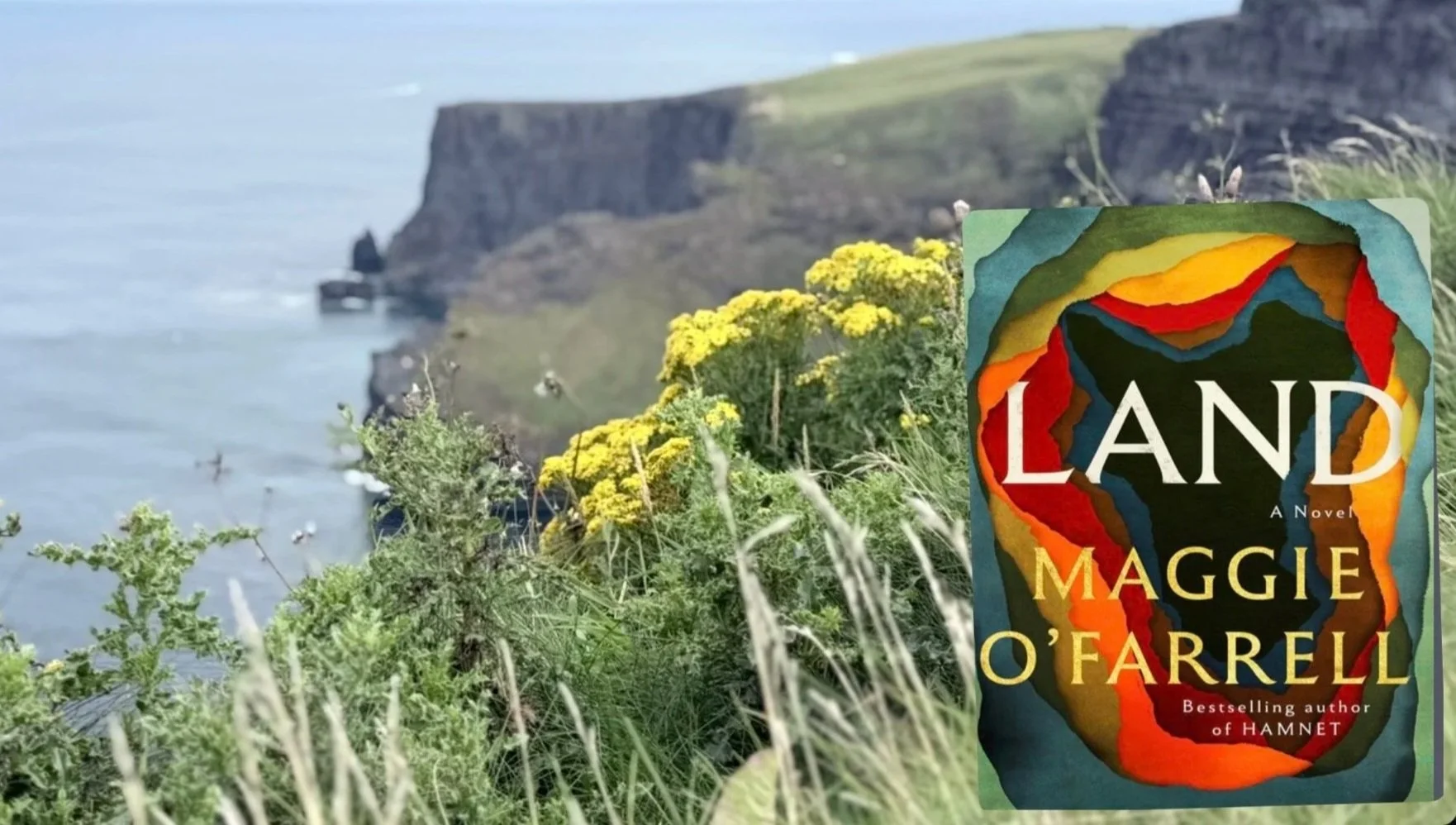
So many of our stories in modern Western European traditions revolve around humans. Be they grand or meek, great or villainous, sure-footed or uncertain, humans tend to dominate our narratives. This is not true for other culture’s stories, I should clarify. In many indigenous story traditions, the nonhuman—from flora and fauna to rivers, mountains, and minerals—play significant parts. Maggie O’Farrells’s newest novel plays into this tradition. Land (2026) is largely the story of an Irish family in the years after The Great Hunger (what some refer to, an oversimplification, as the Irish potato famine). This family — mother and father and their children — is upended when the father has an inexplicable experience on a peninsula in Western Ireland while working as a surveyor for the British. O’Farrell’s writing is powerful as she reveals the complex stories of a family, generation by generation; alongside Phina and Thómas’s family story, though, O’Farrell also develops the older stories of the land.
I have long been fascinated by the old stories of Ireland. Like indigenous traditions from other lands, Irish stories often incorporate things like enchanted springs, other-worldly beings, and talking creatures. Maggie O’Farrell’s Land plays with these tropes; her 19th-century primary narrative weaves in much older threads. Magic, the characters and reader both find, is still alive in the land, even after the devastation of The Great Hunger. Land sees longer than a human lifetime or even a family line; and some characters are more connected to its subtlety than others.
Land is a beautiful and melancholy tribute to the land from which Maggie O’Farrell’s hails. As anyone who has read either her Hamnet (2020) (review available here) or her The Marriage Portrait (2022) (review available here) should expect, this novel digs into the truth of human experience. This novel provides snapshots into the complexity of belonging, faith, family, and place in Ireland. To say I loved this novel would be an understatement; to say it left me mouth agape, tears just at bay, somewhat mystified would be a better descriptor. The final scene truly is a masterful way for O’Farrell to remind the reader: this is story about land, not about any one person or family.
Bibliography:
O’Farrell, Maggie. Land. Knopf, 2026, Libby edition.
A Few Great Passages:
“How radiant, how lovely is the land — and yet how empty. It is as if he has passed through a rent into another realm where humans are unknown, where he is the only one, and will have to make the best of it” (12).
“[T]here needs to be a map of how this land really is, of how it has always been, of what lies beneath whatever order or disorder others might impose upon it” (25).
“This house is a thing both ancient and disjointed, an entity of addition and subtraction, a palimpsest of stone and wood and caulk and mud. Its existence here, on the peninsula, is proof that everything was once something else; nothing goes away” (137).