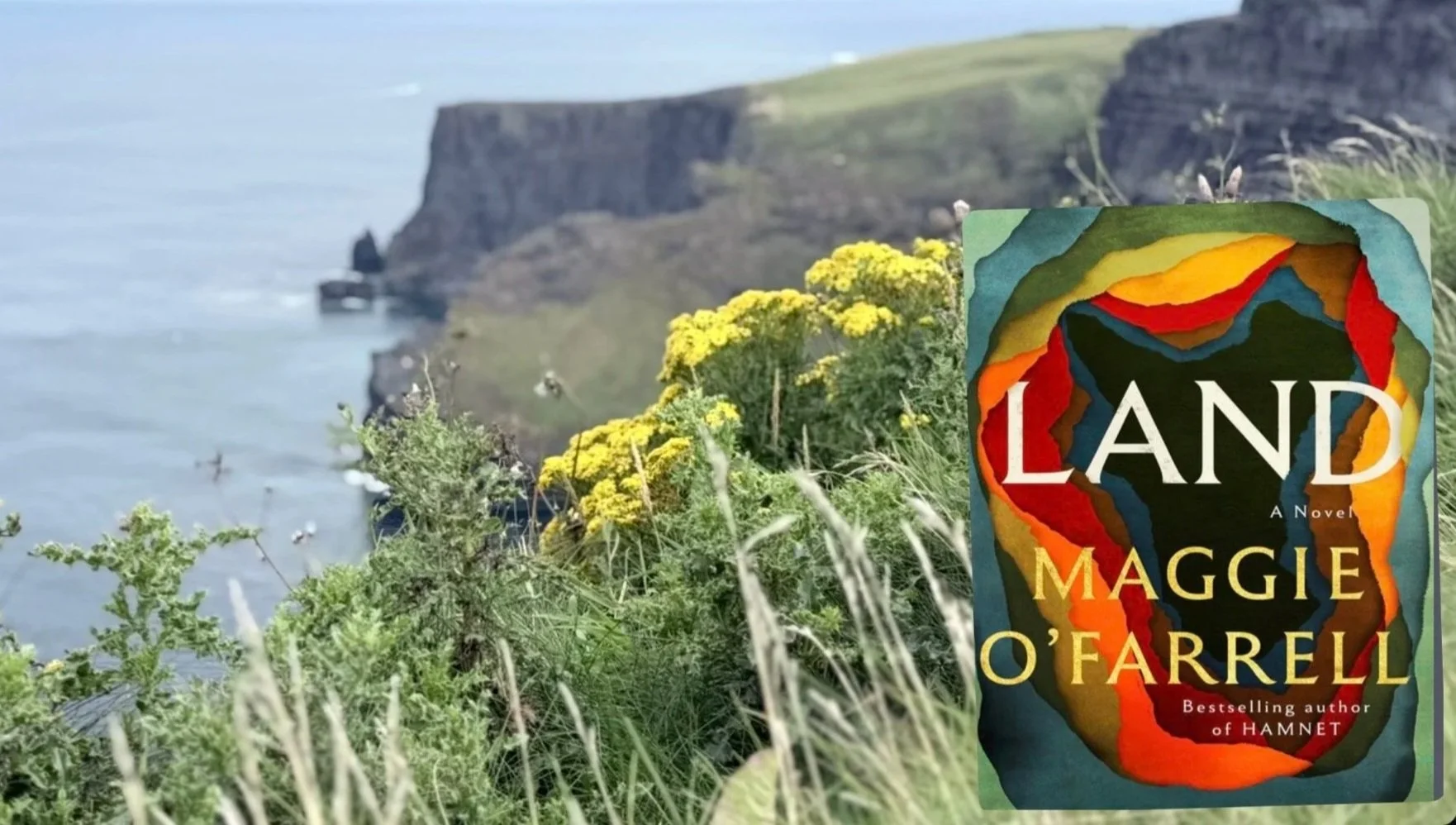
So many of our stories in modern Western European traditions revolve around humans. Be they grand or meek, great or villainous, sure-footed or uncertain, humans tend to dominate our narratives. This is not true for other culture’s stories, I should clarify. In many indigenous story traditions, the nonhuman—from flora and fauna to rivers, mountains, and minerals—play significant parts. Maggie O’Farrells’s newest novel plays into this tradition. Land (2026) is largely the story of an Irish family in the years after The Great Hunger (what some refer to, an oversimplification, as the Irish potato famine). This family — mother and father and their children — is upended when the father has an inexplicable experience on a peninsula in Western Ireland while working as a surveyor for the British. O’Farrell’s writing is powerful as she reveals the complex stories of a family, generation by generation; alongside Phina and Thómas’s family story, though, O’Farrell also develops the older stories of the land.