Piranesi
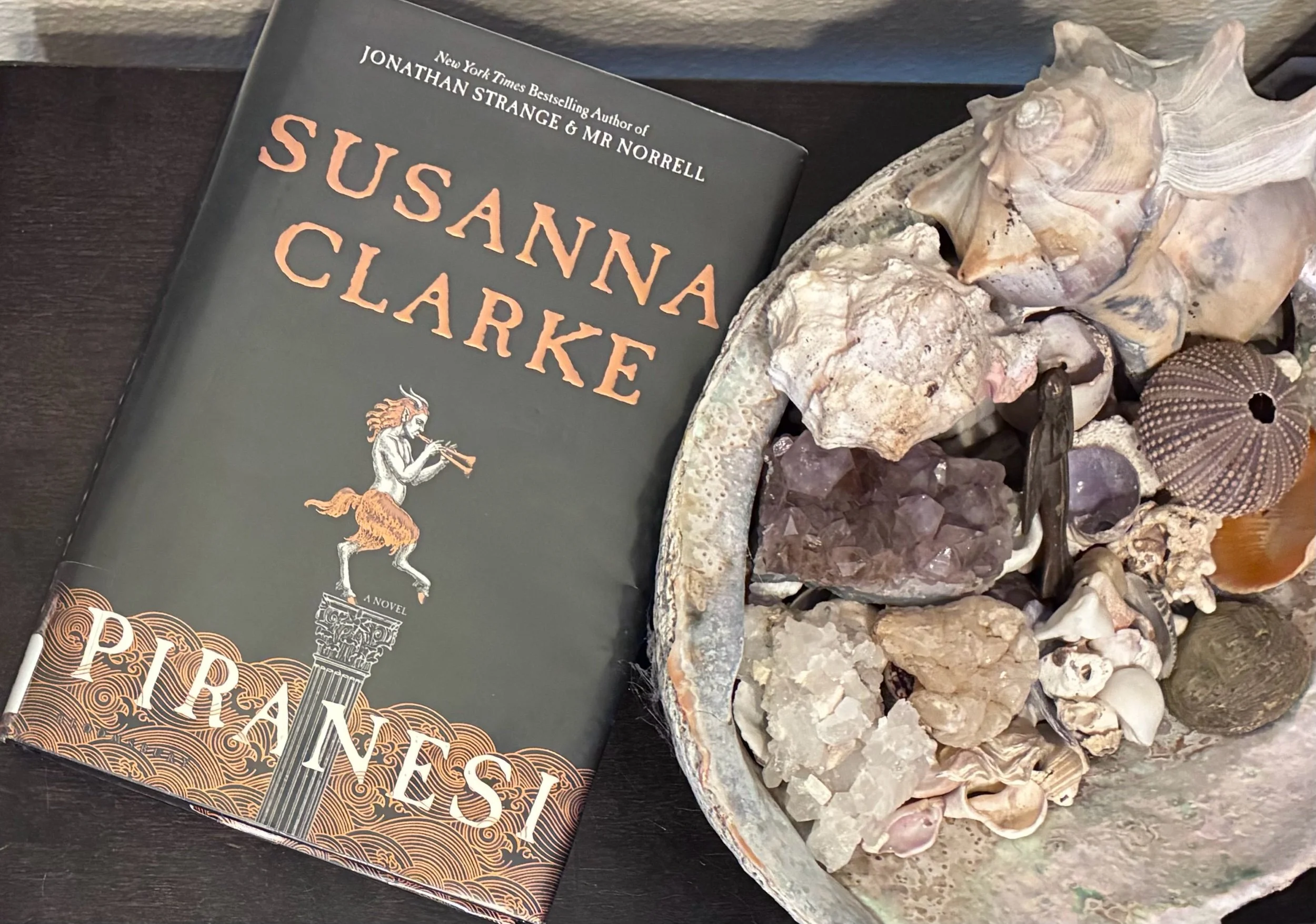
Susanna Clarke’s short novel, Piranesi (2020), is a masterpiece. As the novel, set in a strange and labyrinthine world of the “House,” opens, the titular narrator experiences life largely alone. His only companions are birds, statuary, human remains, and the Other (the only living human to occupy the House, at least occasionally) with whom he meets weekly. This setting is surrounded by sea and Piranesi comes to understand the subtle timing of its tides and storms so as to survive. The House, then, becomes both an Eden and a labyrinth, and the story balances between the idyllic and the nightmarish.
Both inhabitants employ various scientific methodologies in their approach to life. The Other is the alchemist, searching for great power over time and death. Piranesi is the naturalist, the ecologist, the cartographer; the Other heavily relies on Piranesi to provide detailed accounts of the House and its measurements. Yet he seems unable to understand his own mystery; he is nearly certain, for example, that Piranesi is not his real name despite the fact that the Other addresses him that way. There is a tension between contentment and unease, between understanding and confusion that surrounds Piranesi’s experience in the House. Something ominous and unknown tinges his interactions with the Other. This epistolary novel, told entirely through Piranesi’s meticulously recorded and indexed daily journal, includes his carefully kept observations and notes on the House and what he observes within in. While Piranesi’s time-keeping and descriptions of the spacious, many-chambered house full of intricately carved sculptures, may confound the reader at first, what follows is a brilliantly conceived novel that explores themes of imprisonment, trust, isolation, knowledge, mental illness, truth, and connection.
It does not take long before Clarke’s novel takes on qualities of an allegory. Piranesi is Everyman. The House is the world. But the House seems to be enchanted, in communion with its inhabitants, as perhaps the Ancient World may have been. As the story progresses through Piranesi’s daily journal entries, the mystery unravels for Piranesi (and the reader). The literary arts of reading and writing bind Piranesi to experience and anchor him to a narrative beyond madness. Parallel worlds emerge; those who champion the occult and mystical walk between them, but the House—Piranesi’s whole world—pushes back.
As the novel concludes, the reader, like its titular character, must rethink what he thinks he knows. By the end, Clarke’s reference to Giovanni Bautista Piranesi, and eighteenth-century architect an artist famous for his fever-dream inspired images, takes on deeper meaning. Even when all seems confused and unclear, this is definitely a book worth experiencing; the disorientation is, indeed, integral to its message. In less than 250 pages, Clarke explores themes of religion and philosophy, ecology and the connection humans have (or lack) with themselves, their natural environment, and one another.
Bibliography:
Clarke, Susanna. Piranesi. Bloomsbury, 2020.
Ways of Knowing, Ethics of Care in Piranesi’s Labyrinth | Harvard Divinity Bulletin
A few great passages:
“I realised that the search for the Knowledge has encouraged us to think of the House as if it were a sort of riddle to be unravelled, a text to be inter-preted, and that if ever we discover the Knowledge, then it will be as if the Value has been wrested from the House and all that remains will be mere scenery” (60).
“Perhaps that is what it is like being with other people. Perhaps even people you like and admire immensely can make you see the World in ways you would rather not” (228).
“The Beauty of the House is immeasurable; its Kindness infinite” (5, 245).